Pages

Showing posts with label Osho on Life. Show all posts

Thursday, 29 August 2013

LIFE IS AN EMPTY CANVAS _ OSHO

IS NOT LIFE NOTHING BUT MISERY?


It depends on you. Life in itself is an empty canvas; it becomes whatsoever you paint on it. You can paint misery, you can paint bliss.

This freedom is your glory. You can use this freedom in such a way that your whole life becomes a hell, or in such a way that your life becomes a thing of beauty, benediction, bliss, something heavenly. It all depends on you, man has all freedom. That’s why there is so much agony, because people are foolish and they don’t know what to paint on the canvas.

It is left to you, that is the glory of man. That is one of the greatest gifts of god to you. No other animal has been given the gift of being free; every animal is given an already fixed program.

All animals are programmed except man. A dog is bound to be a dog, and forever a dog, nothing else is possible, there is no freedom. He is programmed, everything is built in.The blueprint is there, he will simply follow the blueprint, he will be a dog. There is no choice for him, no alternatives are available. He is an absolutely fixed entity.

Except for man, everything is programmed. The rose has to be a rose, the lotus has to be a lotus, the bird will have wings, the animal will walk on four legs.

Man is utterly free, that is the beauty of man, the glory. The immense gift of god is freedom. You are left unprogrammed, you don’t carry a blueprint. You have to create yourself; you have to be self creative.

So it all depends on you, you can become a Buddha, a bahaudin, or you can become an Adolf Hitler, a Benito Mussolini. You can become a murderer or a meditator. You can allow yourself to become a beautiful flowering of consciousness, or you can become a robot.

But remember, you are responsible-and only you, and nobody else.

An optimist is a man who goes to the window in the morning and says, “Good morning, god” A pessimist is one who goes to the window and says, “My god it is morning?” it all depends on you. It is the same morning, maybe the same window, maybe the pessimist and the optimist are staying in the same room but it depends. And what a difference when you say, “good morning, god” and when you say”my god it is morning?”

I have heard an ancient Sufi parable.
Two disciple of a great master were walking in the garden of the master’s house. They were allowed to walk every day, morning and evening. The walking was a kind of meditation, a walking meditation- just as ZEN people do walking meditation. You cannot sit for twenty-four hours- the legs need a little movement, the blood needs a little circulation- so in Zen and in Sufism both, you meditate for a few hours sitting and then you start meditating walking. But the meditation continues, walking or sitting the inner current remains the same.

They both were smokers. They both wanted to ask for the permission of the master, so they both decided,”tomorrow. At the most, he will say no, but we are going to ask. And it doesn’t seem such a sacrilegious act to smoke in the garden, we will not be smoking in his house itself.” The next day they met in the garden. One was furious – furious because the other was smoking- and he said, “What happened? I also asked, but he simply flatly refused and said no. and you are smoking? Are you not abiding by his orders?” He said, “but he has said yes to me. “This looked very unjust. And the first said, “I will go and immediately inquire as to why he said no to me and yes to you,” The other said, “Wait a minute. Please tell me what you had asked.” He said, what I had asked? I had asked a simple thing, ‘can I smoke while meditating?’  He said no! And he looked very angry. The other started laughing; he said ‘now I know what is the matter. I asked, can I meditate while smoking? He said yes.’
It all depends. Just a little difference, and life is totally something else. Now there is a great difference. Asking, “can I smoke while meditating?” is just ugly. But asking, “Can I meditate while smoking?” – It’s perfectly okay. Good! At least you will be meditating. Life is neither misery nor bliss. LIFE IS AN EMPTY CANVAS, and one has to be very artistic about it. 

A tramp knocked at the door of an inn named “George and the dragon”. “Could you spare a poor man a bit to eat?” he asked the woman who answered the door. “No!” she screamed, slamming the door. A few seconds later, the tramp knocked again. The same woman answered the door. ”could I have a bit to eat?” said the tramp. “Get out, you good–for-nothing!” shouted the woman. “And don’t you ever come back!” after a few minutes the tramp knocked at the door again. The woman came to the door. “Pardon,” said the tramp, “but could I have a few words with George this time?”

Life is the inn called “George and the dragon”. You can ask to have a few words with George too.

Friday, 2 August 2013

Obedience has Simplicity


 "Obedience has a simplicity. Disobedience needs a little higher order of intelligence. Any idiot can be obedient -- in fact only idiots can be obedient. The person of intelligence is bound to ask, 'Why? Why am I supposed to do this? And unless I know the reasons and the consequences of it, I am not going to be involved in it.'" - OSHO

Even if you have to give up a meal, do it...but do not give up Meditation


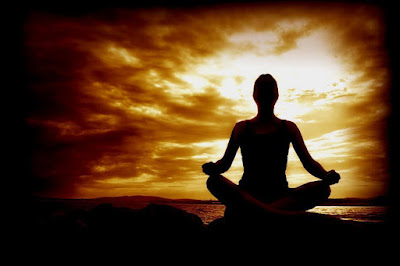
 Even if you have to give up a meal, do it...but do not give up meditation. The more regular you are, the greater depth you will attain. Meditation is such a delicate thing that it takes months to grow but just a day or two to wither away. A delicate thing needs much regularity, continuity. Meditation is the highest; everything else is secondary.

You will not miss much by missing a day’s sleep. One can do without sleeping for five to seven days. It is okay if you miss a meal; man can survive without food for three months. You can go without drinking water for a day; you will not die.

But usually, people give much more importance to such petty things and think that for a day or two they can do without the things that are really significant. But let it be remembered that nothing will go wrong if you do not fulfil the petty things of your routine. You will not gain anything by doing them; nor will you be a loser by not doing them.

But meditation is of the highest, and through it the divine is attained. If you do not meditate, you will not know what you were to gain and what you have missed; you will really not know what you have lost.

The greatest misfortune that can befall people is that they never come to know what they have missed. Apart from missing, people never come to know what they were to gain, they never become aware of it.

So always devote energy to meditation.

Osho

Friday, 4 January 2013

Osho – Life is a curse if you are not aware

Osho on Life
Osho – Life is a curse if you are not aware. Then it is nothing but misery. It is only thorns, not a single rose. From the cradle to the grave there are hopes and man goes on living because of those hopes, but they are never fulfilled.
In the end there is only despair, hopelessness, anguish. That’s our whole anguish. But this tragedy happens only because we are not aware. Awareness functions like magic: it transforms everything into its opposite. Anger becomes compassion, greed becomes sharing, hate becomes love, the very darkness of life becomes light. And then suddenly one discovers that the thorns were not there outside; they were our projection of an unconscious state.
Once you are conscious, there are only roses and roses. The person who coined the proverb that life is not a bed of roses must have been unconscious, unaware, because all the awakened ones say just the opposite: Life is a bed of roses. Hence all that a sannyasin has to do is to shift a gear inside himself from unconscious to consciusness.
And the process is very simple. It cannot be simpler than it is. In fact because it is so simple, people go on missing it. If it was a little complicated, difficult, there would be a challenge for the ego; but there is no challenge for the ego. Ego is always interested in something difficult. The more difficult it is, the better. The ego is interested in going to the moon, to Mars; it is not interested in going within oneself.
The process can be reduced into a simple formula: whatsoever you do, do it but remain alert. Walking, watch your walking; eating, watch you. eating just don’t go on stuffing youself mechanically. The mind is somewhere else, you are thinking a thousand-and-one things and the hands go on stuffing and the mouth goes on chewing. That is a mechanical process. You are not aware of what you are doing.
If you are totally in the moment — only then can you be aware. So forget the whole world while you are eating. Eating, just eat; walking, just walk; listening, just listen; talking, just talk and remain totally in it, alert, aware of each gesture, each nuance. And slowly you will get the knack of it, the hang of it.
It is not a science, it is not even an art. It is only a knack, like swimming — you have just to start throwing your hands. First start in shallow water so there is no fear, then go deeper. First begin with the body — that is the shallowest part of our being. Then go into the mind. Then watch your thoughts, desires, memories. Then go still deeper, dive still deeper — watch your emotions, your moods. And then the fundamental and the ultimate plunge, the fourth, where your centre is. Then become aware of your awareness itself. The moment one is aware of awareness itself the circle is complete . And that is the moment we in the East have called enlightenment.
Man is not imprisoned by outside forces. He is imprisoned by his own unconscious, by his own instincts, by his own biological past. So one can try to be politically free — that is not difficult — but it is not going to bring real freedom.
So almost every counrty is politicallty free but the people are in the same misery. One can try to be economically free. The moment you become rich you are economically free. You can purchase anything you want, you can have all the things of the world. There is no limitation. You can have the best house, the best of everything; still, something will be missing. You will not feel contented. You will not really feel free . On the other hand, you will feel hampered by all your possessions.
The richer a person gets, the more and more he is imprisoned in his richness. He cannot even sleep well. He cannot live in a relaxed way, although he always wished that when the money would be there he would live in a relaxed way. Then life would be just a long holiday. He now has a house in the mountains, a house on the beach, a beautiful yacht in the sea, an aeroplane and everything, but he has no will to relax. In fact in earning all this money he has learned one thing: how to remain constantly tense. He has been always on his tiptoes. Now it is too late to relax.
Relaxation needs a totally different kind of skill — the rich person misses it. Hence the rich person only appears rich. Really he is as poor as anybody else, maybe far poorer than the poor ones. Apparently he has all but inside there is only nothingness, and the freedom that he was thinking would come through econonic prosperity has not arrived.
Money can be earned, freedom cannot be earned. Freedom has to grow within you. It grows simultaneously as a by-product of awarness. The more aware you are, the freer. The moment your awareness is at the peak, your freedom is also at the peak. So only a Buddha, a Christ, a Zarathustra — these few people — have lived and known freedom. And that is the goal of sannays: absolute freedom. The method is awareness.
Source – Osho Book “The Old Pond… Plop”

Thursday, 3 January 2013

Osho – Religion is living. Living totally, living intensely, without any purpose

Osho - Religion is living
Question – Bhagwan, what purpose does your philosophy or religion give for life — for the existence of anything at all?
Osho – First it is not right to make religion and philosophy synonymous. They are two totally different things. Philosophy is thinking about life, its purpose, its goal, but it is only thinking. Religion is living it, not thinking.
The difference is as great as: you are thinking about food, delicious food, and that you are eating it. Thinking cannot quench your hunger — it is only eating that is going to help. Philosophy is a futile exercise of the mind — it leads nowhere.
Secondly, the moment you divide philosophy and religion the question takes a different shape. Now it becomes: what is the purpose of your religion? The very idea of purpose is valid in a philosophical investigation. That idea does not belong to religion at all.
Religion is living. Living totally, living intensely, without any purpose because purpose is always in the future and living is always in the present. If you have a purpose to live your life is divided between present and future — you cannot be total. And without being total you cannot experience what life is.
The only way to be total is to forget all about purpose. It is a meaningless question. It leads only to a logical regress. If it is said that `A’ is the purpose of life then the question will remain `what is the purpose of A?’ The question is not dissolved. If `B’ is the purpose of `A’ then the question will simply shift from A to B.
Finally and ultimately, one has to understand that there is no purpose to life or to existence… and there is no need either.
It is perfectly beautiful to have no purpose and live totally, enjoy totally, relax in the moment totally. It will take you to the peaks of ecstasy — but that is not the purpose of life, it is just a byproduct of total living. It is a little bit difficult. It will lead — I repeat again — to ultimate ecstasy. But that is not the goal. If you make it a goal you will never reach it. It is not a purpose. If you make it a purpose then you are cut off from it forever because purpose and goal all exist in future and you have to live in the present.
And present and future never meet. So you have divided yourself into two halves which are not going to meet. So I will not say that ecstasy is the purpose or the goal. I will say, `when you live intensely, totally in the present, without any purpose and without any goal, ecstasy happens as a byproduct of total living.’
Source – Osho Book “Last Testament Vol 6″

Osho – You cling to life because your life is unfulfilled

Osho on Clinging to Life
Osho – if you want to abide always and always, you have not lived the moment. One who has lived his life truly, authentically, one who has enjoyed it, is always ready to die, is always ready to leave. One who has not enjoyed and celebrated, one who has not lived the moment, the life, is always afraid to leave because “the time has come to leave and I am yet unfulfilled.” The fear of death is not the fear of death, it is a fear of remaining unfulfilled. You are going to die, and nothing, nothing at all could you experience through life — no maturity, no growth, no flowering. Emptyhanded you came, emptyhanded you are going. This is the fear!
One who has lived is always ready to die. His readiness is not a forced attitude. His readiness is just like a flower. When the flower has flowered, has sent its perfume to the infinite corners of existence, enjoyed the moment, lived it, danced through the breeze, risen against the wind, looked at the sky, watched the sunrise, lived it, a fulfillment comes by the evening and the flower is ready to drop to the earth, to go back, to rest. And it is always beautiful — when you have lived, rest is beautiful. It is the thing! The flower simply drops to the earth and goes to sleep. There is no tension, no anguish, no cry, no effort to cling.
You cling to life because your life is unfulfilled. You have not risen against a strong wind. You have not known the morning, and the evening has come. You have never been young, and old age is knocking at the door. You never loved, and death is coming. This unfulfilled state and the coming of death creates the fear. Buddha says that if you have lived you will always be ready to die. And that readiness will not be something forced upon you. It will be the thing, it will be a natural thing! As you are born, you die. As you come, you go. This is the wheel of existence. You lived the being part, now you will live the nonbeing part. You existed, now you will not exist. You rose, you manifested, now you will move into the unmanifested. You were visible, embodied, now you will move without the body to the invisible. You had your day; now you will take rest in the night. What is wrong in it?
The search for the permanent shows that you remain unfulfilled. The search to have a permanent self is a clinging. You know that death is going to be there, so what to do? The body will disintegrate, disappear; now you have your hopes that some permanent self must be there which will go on and on and on. Remember: those who are afraid, they always believe in the eternal soul.
Look in this country: the whole country believes that the soul is eternal, but you cannot find a more cowardly country in the world. It is not accidental. Why are Indians so cowardly? In fact, if they know that the soul is never going to die they should be the bravest — because death doesn’t exist! They go on talking about the deathless, and if you watch their life they are more afraid of death than anybody else. Otherwise, how can you explain the one thousand years of slavery of this country? Very small races — England is no bigger than a small province of India. Three crore people only were able to dominate a country of fifty crore. It seems simply impossible! How did it happen? — because the country is cowardly. They cannot fight, they are afraid of death. They talk about the deathless — and this is not accidental, there is a reasoning behind it.
Whenever somebody talks too much about the deathless it means he is afraid of death, he is a coward. And India has not lived because of the priests. India has not lived life because of the priests. They have been teaching people to renounce, so everybody is ready, before he has lived, to renounce. Then the fear comes in. If you have lived, lived to your total capacity, to the optimum, the fear of death disappears. Only then does the fear of death disappear, never before it. If you renounce life, if you don’t love, if you don’t eat, if you don’t enjoy and dance; if you simply renounce and condemn and you say, “This is all materialistic. I am against it”… who is this “I” who says “I am against it”? This is the ego.
You cannot find greater egoists than so called spiritualists. They are always condemning the materialist. They are always saying: “What! You are wasting your life. Eat, drink, and be merry — this is your religion. You are a burden on the earth. You have to be thrown into hell.” Who is condemning? What is wrong in “Eat, drink, and be merry”? What is wrong in it? That is the first part of life. It should be so. You should eat, drink, and be merry.
You should celebrate. Only then, when you have celebrated to the optimum, are you ready to go, are you ready to leave and with no grudge, with no complaint. You lived the day, now the night has come. And when the day was so beautiful — you rose with the waves in the sky, and you did whatsoever the moment demanded — then the rest, then going back to the earth is beautiful.
India has been renouncing, and a religion that renounces is false. A religion that makes you capable of celebrating to the optimum is the true religion. And this is the beauty of it: if you live life, a renunciation comes automatically. It happens — that is the nature. If you eat well, satiety comes. If you drink well, the thirst disappears. If you lived well, the clinging to life disappears. It has to be so. This is the law, the logos. If you have not lived well, then you always remain clinging, then you always dream about how to live. And if you have renounced this life you have to project another life. You need a permanent self, otherwise what will you do? You missed this life, and there is no other life? You need a permanent self. You have to believe and console yourself: “Okay, the body dies but the self never dies.”
Source – Osho Book “The Hidden Harmony”

Sunday, 30 December 2012

Osho on Confusion in Life

Osho on Confusion in Life
[A sannyasin, returning to the West, says she is confused.]
Osho – Confusion remains, and one has to learn to live with it because life cannot be sorted out; it is so big. The confusion arises because of our impossible effort to sort everything out; it is too big for that! There is no way to know everything so something or other always remains unknown. That unknown goes on creating confusion.
So one has to learn to live with it, then by and by it disappears and instead of confusion a totally different new thing arises… and that’s what is called wonder. It is the same energy that becomes confusion or wonder.
When a child has the same energy he simply feels wonder – because he is not in any way concerned about solving anything; he is ready to accept the mystery of it. He has no conflict between the known and the unknown; he does not make any distinction between the real and the dream.
Sometimes it happens that a child may have been playing with a toy in his dream and when he awakes he cries for the toy and asks, ’Where has it gone?’ We go on saying that it was just a dream but he says, ’But where is it now?’ He makes no distinction between the dream and the real, he does not make distinctions. If you don’t make distinctions confusion cannot arise.
So the more a person is trying to solve things, the more confused he will become. Intellectual people become more confused than emotional people. Then there are gut people also. They never become confused: they simply like things as they come.
The moment we think about life as if it is a problem, we are in confusion. The moment we start thinking that it is not a problem to be solved but a mystery to be lived, that there is no way to know and whatsoever we know will remain very very limited; the unknown will remain unlimited…. We can create a small candlelight around ourselves but the whole existence remains dark. How can you be unconfused? You will remain confused if you don’t accept that darkness, if you don’t accept the mystery of life.
Yes, there are problems and there are many things which one would like to sort out, but they cannot be sorted out. This is what I call learning to live with it. Once you start learning to live with it, by and by confusion disappears, because confusion is an interpretation, and instead of confusion the same energy becomes more and more full of wonder. You are simply surprised by the mystery of life, you are simply surprised that nothing can be solved. You are simply surprised that it is not a puzzle; it is a mystery. And the mystery is more fundamental than us – because we come out of it.
The mystery was there before we came in, the mystery will be there when we are gone, so the mystery is infinite. We are just small waves of the ocean. Confusion arises and the wave sometimes goes mad. It is not an accident that great thinkers in the West – a Friedrich Nietzsche or a Mayakovsky – people who were really of great intelligence have almost always gone mad.
Now my feeling about Nietzsche is that had he been in India he would have become a buddha. His intelligence is superb, incomparable – but he simply went into a madhouse, a mad asylum, and died as a madman. In India the same energy would have been transformed with a totally different outlook. He would have become a poet. He had that quality and unconsciously many of his writings are more poetic than philosophic: ’Thus spake Zarathustra’ is great poetry, as great as Bhagavadgita. But he went mad, because a wrong notion exists in the western mind that everything has to be clear-cutly solved; everything has to be reduced to statistics. No comer of mind should be left in the dark. Everything should finally be decided in black and white, only then can we be at ease. Then there is confusion.
Become a child: don’t try to solve it – it is too big and in trying to solve it you will miss your life. Those beautiful moments which could have been of tremendous joy will be lost in trying somehow to manage the problems of life, to solve the confusions of life, the riddles of life, and it will be a burden rather than being a celebration.
Don’t be cerebral, don’t be in the head. Start enjoying more, laughing more. Start approaching the mystery of life more innocently… with no concept of finding the answer. There is none, there exists none. The answer is no answer. The wise man drops questioning. The moment you drop questioning there is no confusion; suddenly it disappears. The confusion is created by our questioning mind.
My whole effort here is to create an unquestioning consciousness – a great trust, a deep acceptance, a reverence for life. In fact, the very effort to solve it is disrespectful. It means we want to reduce god to a syllogism. We want to reduce love into chemistry. We want to reduce everything into the manageable… and wherever we find that things are unmanageable, beyond us, cannot be grasped, we are in confusion. Turn this confusion into mystery – it is the same energy, and mystery is such a joy! Confusion is such a disease, confusion creates hell!
Wherever you are, continue to meditate. And let this be your approach: create more wonder in life, remain surprised, and remain available for more and more surprise. Let each moment be an encounter with the mysterious. Continue to meditate and help my people wherever you are.
Source – Osho Book “The Further Shore”